We Are A Special People
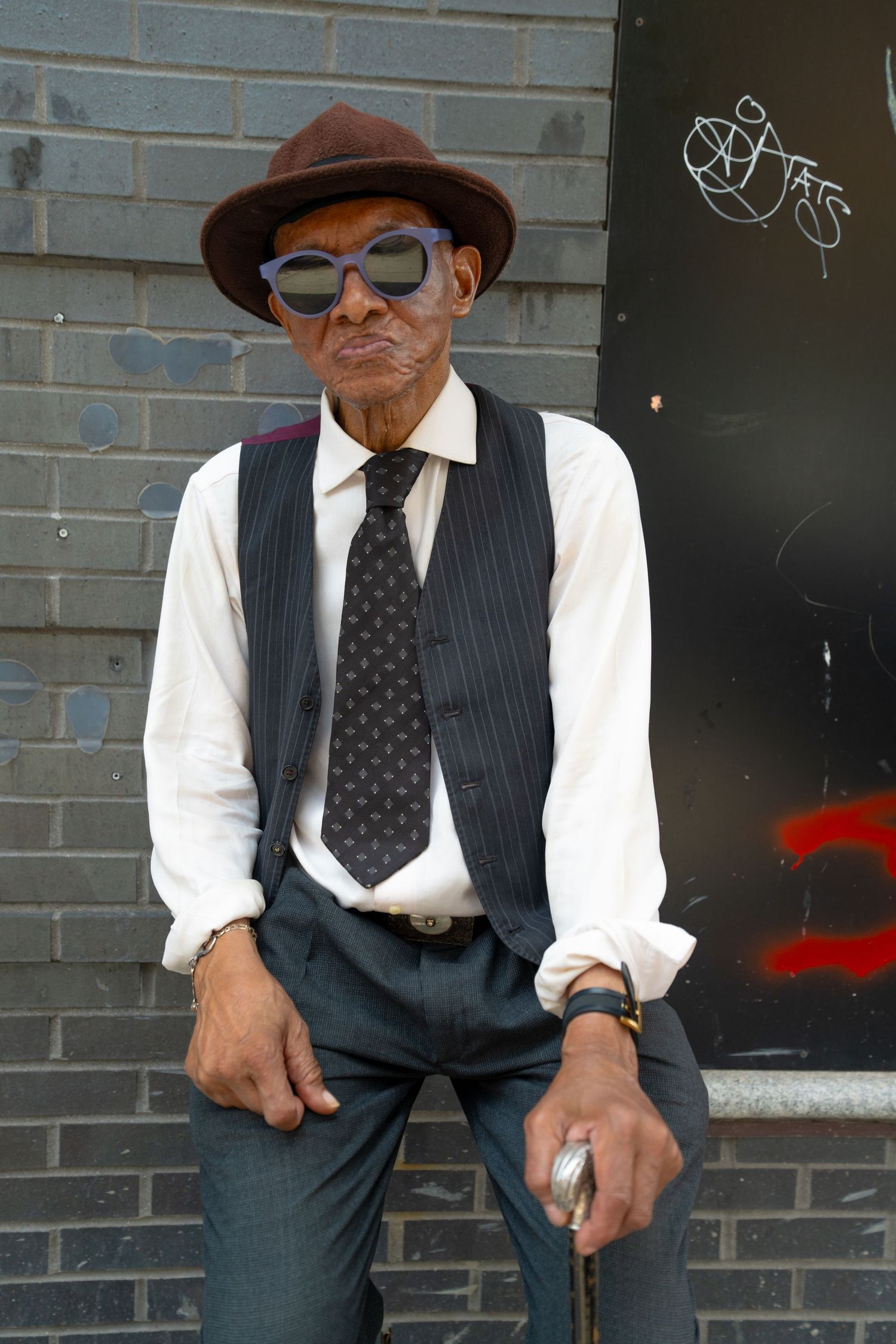
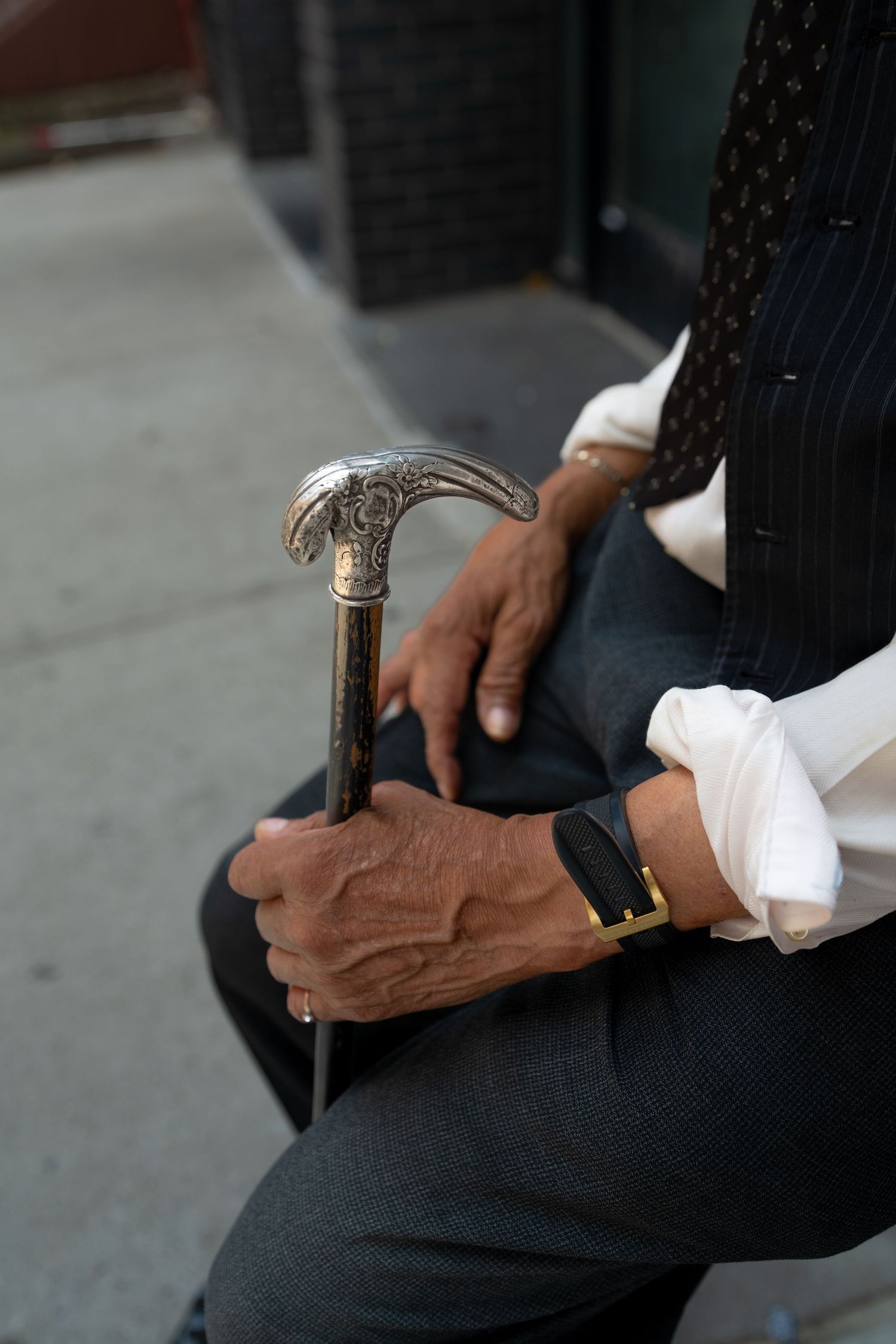
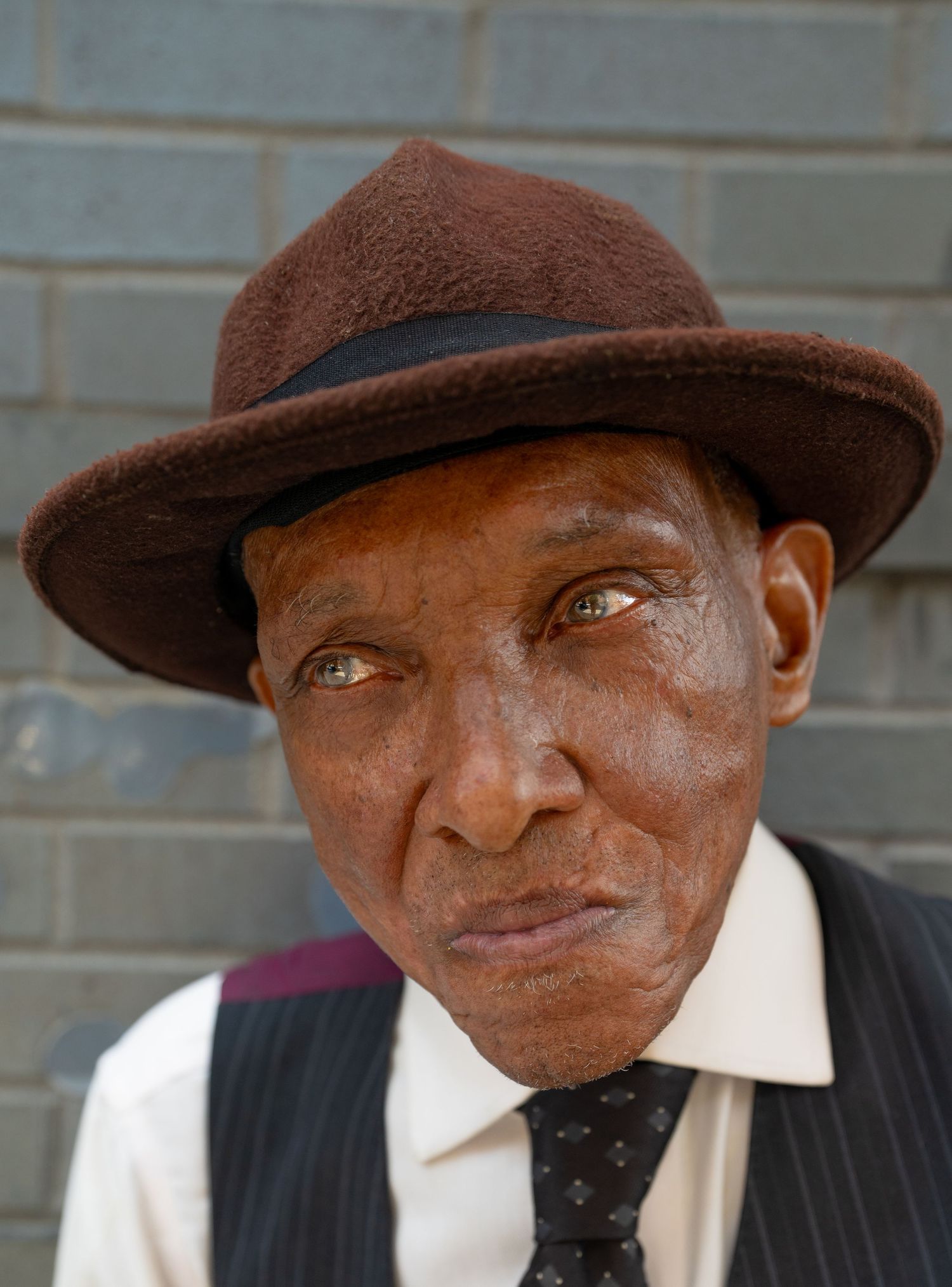
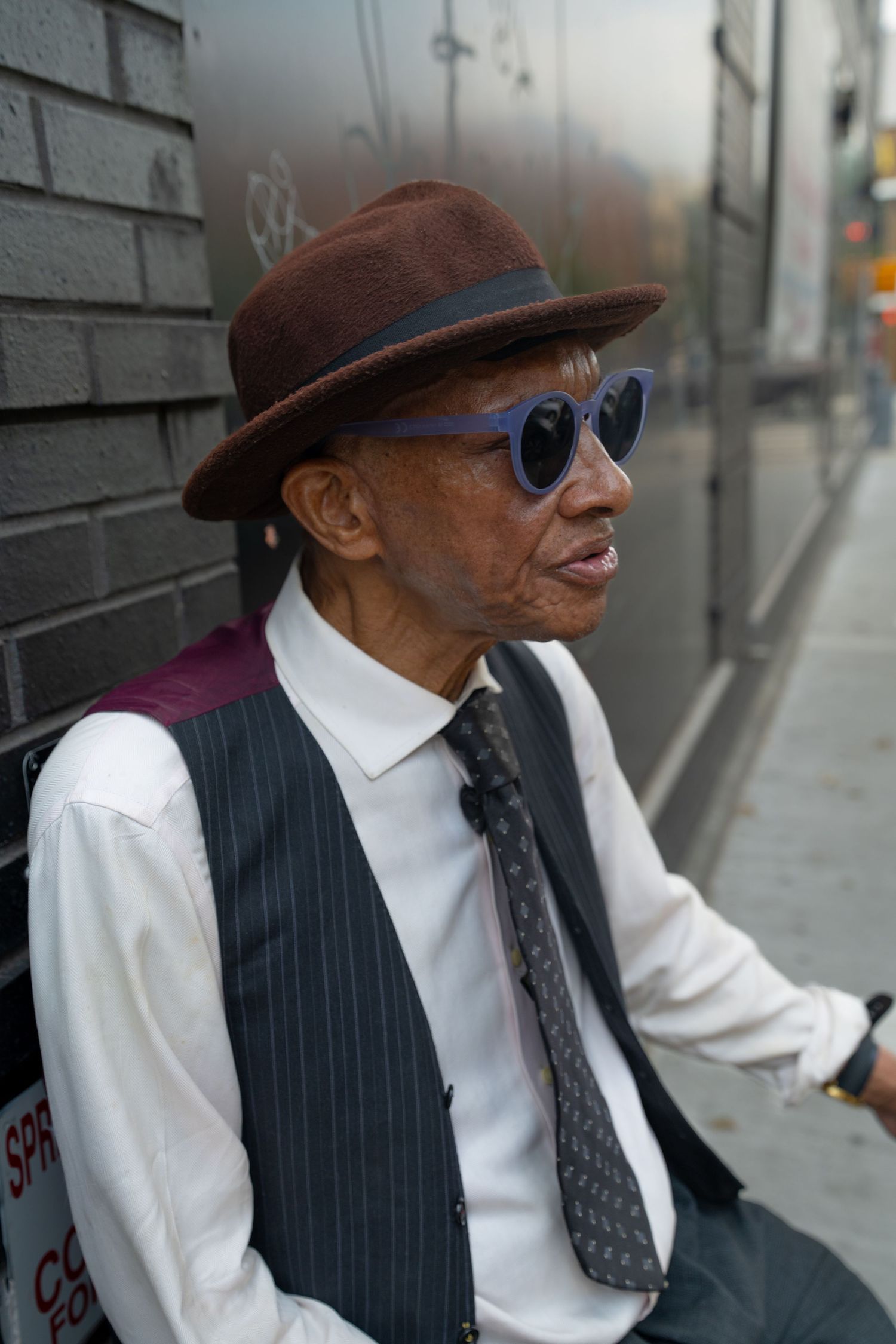
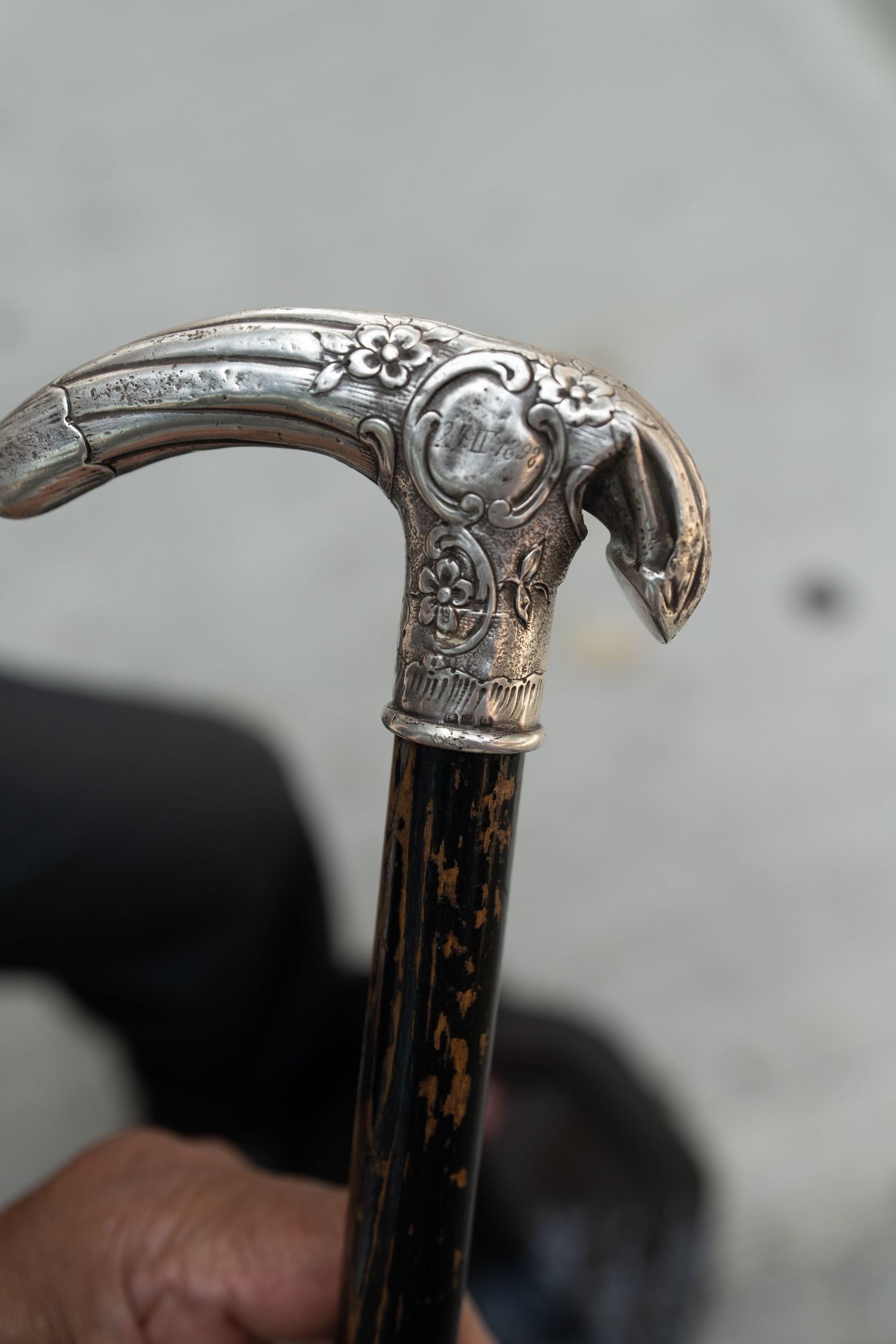
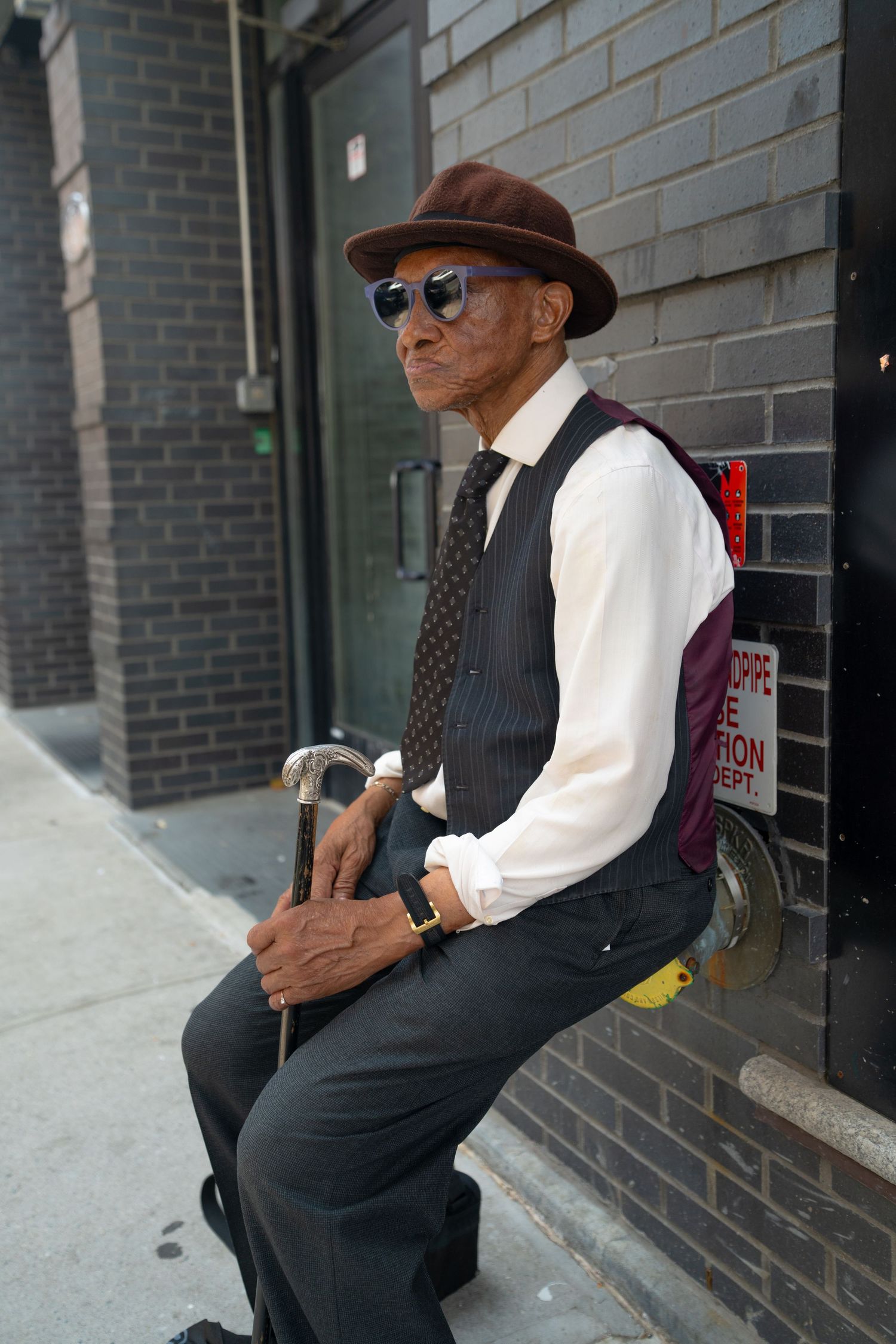
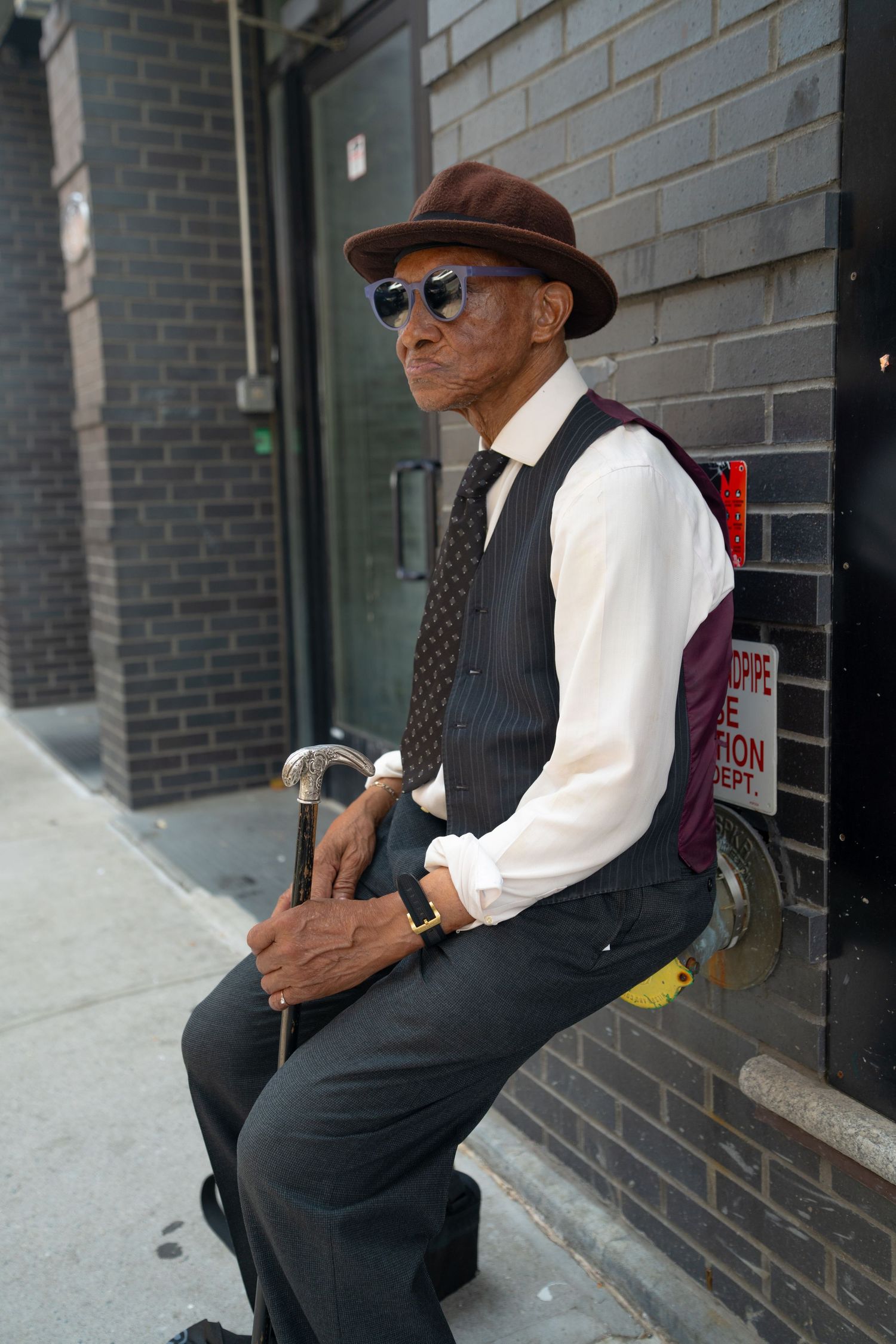
On a beautiful Saturday afternoon, I was walking from Central Harlem to East Harlem (aka Spanish Harlem or El Barrio). I’d been visiting the various NYC Open Streets events celebrating Harlem Week. Well into the east, I happened across an elder sporting a brown brim style hat who was preparing to rest against the side of a building by sitting on its emergency fire hydrant connection. Charles Mannings Jr. (Mannie) was probably the best dressed man on the block that day. If you’ve been on 125th, or the block radius of Third Ave, 116th, Lexington Ave, and 117th you know the scene and you know the smell. Mannie’s presence and style prompted me to ask permission to photograph him.
It was almost as if we knew each other already, the way we began to share our stories. His energy felt familiar because of his mannerisms. Mannie (age 80) moved to Harlem in 1968. He graduated from Alfred Ely Beach High School in Savannah, Georgia in 1966. A year later he was enrolled at Savannah State University (formerly Savannah State College). One unfortunate racially charged event led to Mannie’s withdrawal from SSC (SSU) and a one-way ticket to New York City for his protection. That event included changing the spelling and pronunciation of his last name. When Mannie arrived to Harlem, he had never seen anything like it. The hustle and bustle, the tall buildings, so many Black people doing well in one place — the atmosphere was foreign to him — and rightly so due to historical reasons being raised in the then very rural Jim Crow South.
I asked Mannie how he felt watching the change of Harlem over the years and the present-day in-your-face sight of substance abuse, stench, and homelessness. His soft-spoken response: “Drugs have always been around. Some people just don’t know how to say no. *Mannie chuckles* Esther Phillips in ‘68 would be, so drunk walking the streets [after a night out] that you’d have to ask her where her shoes are. Anywhere you go in the world, there are people using drugs.” Esther Phillips (1935 - 1984) was a Grammy nominated Blues, Country, Jazz, Pop, Soul, and R&B singer who succumbed to kidney failure from substance abuse.
He continued: “[Aside from that], Malcolm (X) and Muhammad (Honorable Elijah Muhammad) used to give speeches here in Harlem. I also used to see pimps with rings and big cars. We had a history before slavery. We are a special people.” Mannie paused and stared into the distance with his eyes hidden behind his stylish purple sunglasses.
"Young people are, so blessed. They're so geared up. When I was coming up you couldn't aspire to be a policeman or fireman. We would go down south to see Martin Luther King Jr. speak." Mannie paused again. This time he seemed to be remembering moments from his past. "Despite being told that were 1/5 of a human being, it didn't bother us. We knew we're special people. As long as we had food and clean clothes, we were good." Before learning the aforementioned information. I had told Mannie that I grew up in Atlanta, Georgia. After he shared that he was from Savannah, I was moved to share that I spent part of my youngest adult years as a student at SSU and had previously worked with the City of Savannah post graduate school.
As we shared stories and discussed our families, Mannie paused again this last time sighing heavily with a smile on his face. "Mama used to make sweet potato pies and macaroni. Those pies were so good. Nowadays everything is artificial," he said. I accidentally blurted out in laughter, in the thought of "everything" actually being artificial. From food to body parts, "Italian leather" to luxury goods, and of course internet couples and intelligence, many things appear mislabeled and unauthentic in materialization.
Mannie loves Harlem for its accessibility, its arts and theaters, "the availability to buy flowers for your special lady," and because Harlem has one of the largest Black populations in the United States of America. I didn't know that bit of information. I had read about the Harlem Renaissance in school, but that was before Mannie's time. I'm aware of influential people like fashion icon Dapper Dan, musician A$AP Rocky, legendary artist Jacob Lawrence, and of course places like the world famous Apollo Theater which hosted Michael Jackson and Prince. Harlem has many sides and experiences. However, when it comes to being great and in NYC, Harlem's resume is stacked. Harlem is unrivaled in culture and diversity of its arts, culinary and STEM contributions to modern society.
Before we said our goodbyes, Mannie recited Invictus by William Ernest Henley. This unannounced recital caused the hair on my arm to raise as chills went through my body in understanding of what had just transpired. If you know, you know. Mannie left me with these words to ponder on: "We had some of the worst times and some of the best. Times could have been worse, but they weren't." As a person belonging to multiple special people, I can agree with Charles Mannings Jr. I'm thankful to have been blessed to listen to his story,